

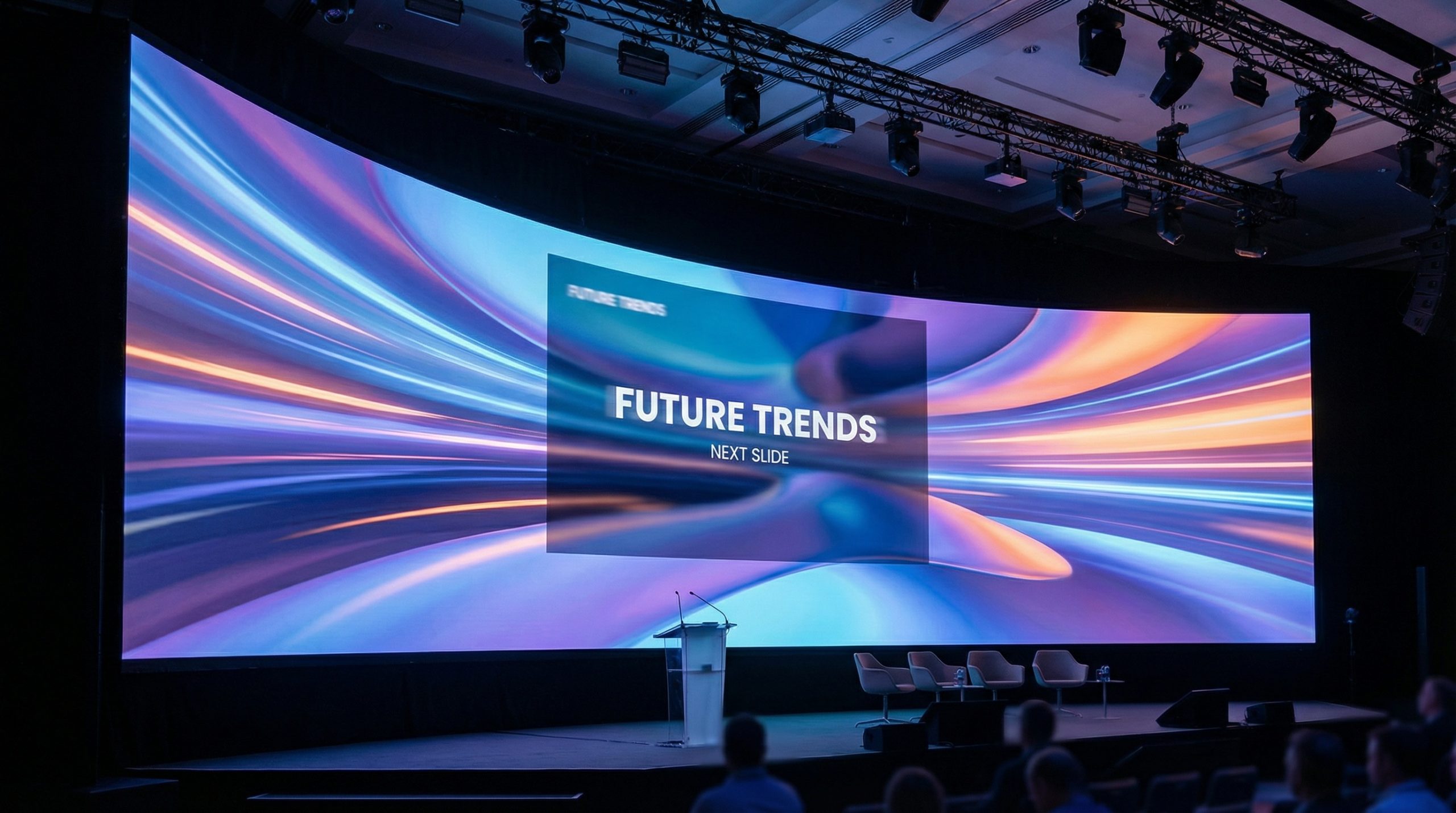
Let me describe two presentations I sat through last month. The first was a quarterly review where every single element — titles, bullet points, charts, even the page numbers — flew in from different directions with a bounce effect. By the fifth slide, I felt like I was watching a pinball machine. The second was a product launch where the presenter used one subtle animation — a morph transition that smoothly transformed a product sketch into the final design. The audience actually gasped.
Same tool. Same feature set. Completely different outcomes. Animation in presentations is the most misunderstood design element, and getting it right can improve your slides from functional to cinematic. Getting it wrong can make even brilliant content feel amateur.
I’ve redesigned hundreds of slides, and the animation mistakes I see follow consistent patterns. Here’s everything I know about when to animate, when to skip, and how to make motion work for your message instead of against it.
Why Most Animations Fail
Here’s the rule I swear by: every animation must have a purpose. If you can’t articulate why an element needs to move, it shouldn’t move. Animation without purpose is decoration — and on slides, decoration is noise.
The three most common animation sins:
The variety show. Different animation effects on every slide — fade here, fly there, spin on the next one. This screams “I just discovered the animation panel and tried everything.” Pick one or two effects and use them consistently throughout your deck.
The slow reveal. Making your audience wait 45 seconds while eight bullet points crawl onto the screen one by one, each with its own entrance animation. If the information needs to be seen together, show it together. Progressive disclosure only works when each step adds meaningful context.
The speed demon. Animations set to 0.25 seconds that flash by so fast they create visual static rather than visual flow. Good animation needs at least 0.5 seconds to register — and most purposeful animations work best at 0.75 to 1.0 seconds.
The Four Animations Worth Using
Out of the hundreds of animation presets across PowerPoint, Keynote, and Google Slides, I regularly use exactly four. That’s it. Four animations that handle every legitimate use case I’ve encountered in over a decade of slide design.
1. Fade In (Appear with opacity transition)
The workhorse. Use it for progressive disclosure — revealing content step by step as you talk through a process or argument. Set duration to 0.5-0.75 seconds. It’s subtle, professional, and doesn’t draw attention away from the content itself. In PowerPoint, you can set this up quickly and apply it across elements with the Animation Painter.
2. Morph Transition (PowerPoint) / Magic Move (Keynote)
This is the single most powerful animation feature in modern presentation software. Morph automatically animates the differences between two slides — an object that changes position, size, color, or shape transitions smoothly from one state to the next. It’s how you create those polished, almost cinematic transitions that look like they took hours but actually take minutes.
Real example: I had a client who wanted to show their organizational restructuring. Instead of a static “before and after,” I placed the org chart on two consecutive slides with names moved to new positions. Morph animated the reorganization in real time. The CEO later told me it was the single most effective visual in the entire board presentation.
3. Zoom Transition
PowerPoint’s Summary Zoom and Section Zoom let you create non-linear presentations that zoom into sections like a visual table of contents. I use this for workshops and training sessions where the audience might want to revisit sections or where the flow might change based on questions. It’s presentation-as-navigation rather than presentation-as-slideshow.
4. Simple Wipe (for reveals)
When you need to reveal something directionally — like showing a timeline from left to right, or unveiling a comparison one side at a time — a wipe effect works better than a fade because it implies direction and sequence. Keep it quick (0.5 seconds) and match the wipe direction to the content’s logic (left-to-right for timelines, top-to-bottom for hierarchies).
When Animation Actually Helps
Animation earns its place in your deck in four specific scenarios:
Building complex diagrams step by step. If you have a process flow with six stages, showing all six at once overwhelms the audience. Revealing each stage as you discuss it lets them build a mental model progressively. This is animation at its best — it mirrors how understanding develops.
Showing transformation or change. Before/after comparisons, growth over time, structural changes — these are stories of movement, and animation makes them literal. A chart that grows, a design that evolves, a map that zooms — these are inherently dynamic concepts that deserve dynamic visuals.
Directing attention in complex slides. Sometimes you can’t avoid having a dense slide — a detailed architecture diagram, a competitive landscape, a full financial model. Animation lets you spotlight specific areas as you talk through them, essentially giving your audience a guided tour of the information. Highlight one section, dim the rest, then reverse.
Creating emotional impact. A single word appearing on an empty slide. A photo that slowly fills the screen. A number that counts up to a surprising total. Used sparingly — maybe two or three times in an entire presentation — dramatic animation can create genuine moments. But the keyword is sparingly.
When to Skip Animation Entirely
Your audience decides in the first 3 seconds whether a slide is worth their attention. If animation delays that decision without adding value, skip it.
Simple information slides. If your slide has a heading and three bullet points, just show them. Fading in each bullet creates an artificial pause that adds nothing when the content is straightforward.
Any slide that might be shared as a PDF. This is the practical consideration most people forget. If your deck will be emailed, exported, or uploaded, animations disappear. Your slides need to make sense as static images — animation should enhance the live experience, not be required for comprehension.
When you’re short on rehearsal time. Animated slides require precise timing in delivery. You need to know exactly when to click, which can add cognitive load when you’re already nervous. If you haven’t rehearsed with your animations at least three times, simplify. For more on rehearsal techniques, our complete presentation guide has a solid framework.
Content-heavy training decks. For training presentations that people will reference after the session, static layouts with clear visual hierarchy communicate better than animated sequences they can’t replay.
Technical Tips That Make a Real Difference
A few specific techniques I’ve developed over years of trial and error:
Use “With Previous” more than “On Click.” In PowerPoint, setting multiple elements to animate “With Previous” at staggered delays (0.0s, 0.15s, 0.3s) creates a smooth cascade that feels choreographed. It’s more elegant than clicking through each element individually, and it reduces your cognitive load during delivery.
Match animation duration to content weight. A small icon can fade in at 0.3 seconds. A full-screen image reveal should take 0.75-1.0 seconds. A key statement that you want the audience to absorb? Let it fade in over 1.0-1.5 seconds. Duration communicates importance.
Keep transition styles consistent. If you use Morph for section transitions, use it for all section transitions. If your build slides use Fade, use Fade for all build slides. Mixing transition types within the same category creates visual inconsistency that feels unprofessional.
Test at presentation speed. Animations that feel right in editing mode often feel slow during a live talk when adrenaline is running. I typically reduce my animation durations by about 20% after my first rehearsal run-through.
A Before-and-After Example
Let me walk you through a real redesign. A client had a “company timeline” slide with twelve milestones all visible at once, plus a bouncing star animation on each year marker. It was chaos.
Here’s what I did: I split it into four slides using Morph transitions. Each slide showed three milestones, with the timeline bar smoothly extending from slide to slide via Morph. The year markers simply faded in with a 0.3-second delay between each. The entire sequence took 45 seconds to present versus the 2 minutes the original slide took — because the audience wasn’t trying to process everything at once.
The result looked like a polished motion graphic. The actual effort? About 20 minutes of work. Morph did the heavy lifting.
If you want to see more transformation examples like this, our slide makeover case study walks through a complete corporate deck redesign, including animation decisions.
Know When to Animate and When to Stop
If you take nothing else from this article, take this: animation should be invisible. Not literally invisible — but your audience should never think “nice animation.” They should think “that was clear” or “I understand now” or “wow, that’s a striking visual.” The animation serves the understanding, never the other way around.
Start with zero animations. Then add only what’s necessary to support comprehension or create emotional impact. When in doubt, don’t animate. A clean, static slide will always outperform a cluttered, animated one.
And pair good animation habits with strong foundational design principles. Motion without good design is just movement. Motion with good design is storytelling.