

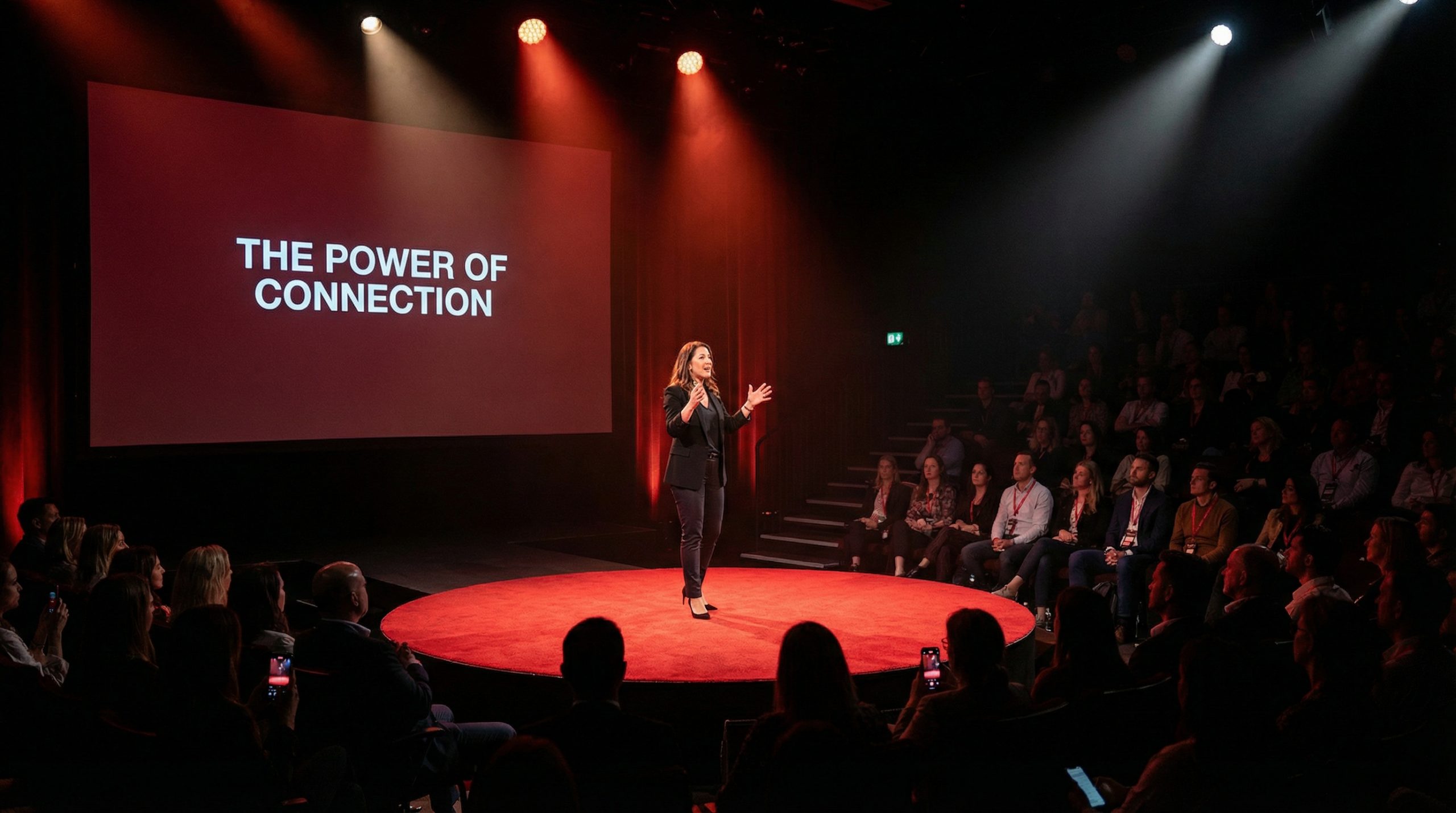
I’ve watched over 500 TED and TEDx talks. Not casually — studied them. I’ve sat with a notebook, pausing and rewinding, mapping out structure, timing emotional beats, analyzing how speakers use silence, movement, and story. And after all of that, I can tell you: the best TED speakers aren’t doing what most people think they’re doing.
They’re not “natural speakers.” They’re not winging it. They’re not just charismatic people who happen to be good in front of a camera. What they are is obsessively prepared performers who have mastered a specific set of techniques that make complex ideas feel simple, personal, and urgent.
Here’s what the best speakers do differently — and how you can apply these lessons to your next presentation, whether it’s a conference keynote or a Monday morning team meeting.
They Open With a Story, Not a Statement
Watch the opening 30 seconds of any top TED talk. Almost without exception, the speaker drops you into a scene. Not a thesis statement. Not “Today I’m going to talk about…” A scene.
Brené Brown opens her famous vulnerability talk by telling you she’s a researcher who was told she’d be a great fit for a TEDx event — then immediately undercuts it with self-deprecating humor about not being a “performer.” Within 30 seconds, you know she’s funny, relatable, and honest. You’re hooked.
Sir Ken Robinson opens his talk — the most watched TED talk in history with over 70 million views — by commenting on how wonderful the other speakers have been and joking that he’s feeling redundant. Then he drops into a story about a six-year-old girl drawing a picture of God.
The pattern is consistent: story first, framework second. The story creates emotional connection, which earns permission to teach. Without that connection, even brilliant ideas bounce off the audience. For building your own powerful opening, our complete guide to presentations walks through several opening techniques.
They Deliver One Idea, Not Ten
TED‘s official format guideline is an “idea worth spreading.” Singular. One idea. And the best speakers take this constraint seriously.
Simon Sinek’s “Start With Why” talk doesn’t cover leadership theory, organizational behavior, AND marketing strategy. It presents one framework — the Golden Circle — and explores it from multiple angles. Every story he tells, every example he gives, serves that single idea.
This is harder than it sounds. Most presenters I coach instinctively want to cover everything they know about a topic. “But what about this related concept? And shouldn’t I mention this exception?” The answer is usually no. Depth beats breadth. An audience that deeply understands one idea will remember it and act on it. An audience that superficially encounters ten ideas will remember none.
My test: can you state your entire talk’s idea in one sentence, simple enough that a 12-year-old would understand it? If not, you haven’t narrowed enough.
They Use the “What If” Structure
One of the patterns I see most consistently in compelling TED talks is what I call the “What If” structure. The speaker identifies a commonly held belief, challenges it, and then offers a new perspective.
“What if schools kill creativity?” (Ken Robinson)
“What if vulnerability isn’t weakness but strength?” (Brené Brown)
“What if the most powerful leaders start with why, not what?” (Simon Sinek)
“What if your body language shapes who you are?” (Amy Cuddy)
This structure works because it creates cognitive tension. The audience holds a belief. The speaker challenges it. That gap between what you believed and what might be true creates curiosity — and curiosity is the most powerful engagement tool a speaker has.
You don’t need a revolutionary idea to use this structure. Even in a corporate presentation, you can frame your message as a “what if”: “What if our declining engagement scores aren’t about compensation — what if they’re about how we run meetings?”
They Master the Pause
Watch any great TED speaker and you’ll notice something that separates them from average presenters: they’re comfortable with silence. After making a key point, they pause. Not a half-second pause — a full two or three seconds of quiet. Long enough that it feels deliberate. Long enough that the audience has time to absorb what was just said.
Most presenters rush to fill silence because it feels uncomfortable. But to the audience, the pause communicates confidence and gives the brain processing time. It says “what I just said was important enough to let it land.”
I timed the pauses in Brené Brown’s vulnerability talk. She averages a meaningful pause every 45-60 seconds, and her longest pauses come after her most significant insights. It’s not random — it’s choreographed silence.
My advice: mark pauses in your notes. Write “[PAUSE]” after your three most important statements and practice honoring that pause for a full two-beat count. If you struggle with stage fright around silence, our guide on conquering stage fright has techniques that specifically help.
They Use Specific Details, Not Generalities
Here’s a pattern I noticed after watching my hundredth TED talk: the most memorable speakers are incredibly specific. They don’t say “a school.” They say “a school in inner-city Baltimore with a 38% graduation rate.” They don’t say “a company.” They say “a 12-person startup in Palo Alto that had just been rejected by every VC on Sand Hill Road.”
Specific details do two things: they build credibility (this person was actually there, they know this subject intimately), and they create vivid mental images that stick in memory. Your brain doesn’t remember “a place.” It remembers “a hospital waiting room with green fluorescent lighting and a vending machine that took two minutes to dispense a bag of chips.”
When you’re building your next presentation, go through your stories and add one specific sensory detail to each. What did the room smell like? What color was the wall? What exact number was on the screen? These details transform generic anecdotes into memorable scenes.
They Rehearse Far More Than You Think
TED’s head of speaker development, Chris Anderson, has spoken publicly about TED’s rehearsal process. Speakers typically rehearse their 18-minute talks 200+ times. That’s not a typo. Two hundred times.
This level of preparation is what creates the paradox that makes TED talks feel so natural. The speakers aren’t winging it — they’ve rehearsed so thoroughly that the performance feels effortless. They know every word, every transition, every emotional beat so well that they can focus entirely on connection with the audience rather than remembering what comes next.
You probably don’t need 200 rehearsals for your quarterly update. But the principle scales: the more prepared you are, the more natural you appear. I recommend at least 5 full run-throughs for any presentation that matters — standing up, speaking out loud, with slides. Record at least one of them and watch it back. It’s painful but transformative.
They End With a Call to Action, Not a Summary
Great TED talks don’t end with “In conclusion, today I covered three points…” They end with a charge — a direct appeal to the audience to do something, think differently, or see the world through a new lens.
Ken Robinson doesn’t end by summarizing his points about education. He ends with a plea: we must rethink the fundamental principles on which we’re educating our children. Brené Brown doesn’t recap her research findings. She challenges the audience to be vulnerable, to be seen, to show up even when there are no guarantees.
The closing is your last impression. It’s what people carry out the door. Don’t waste it on a summary they could read in a handout. Use it to move them.
My formula for a powerful close: revisit the opening story (full circle), state the one idea in its sharpest form, then issue a challenge. “The next time you stand in front of a room, remember: they don’t need your perfection. They need your truth.”
Applying TED Techniques to Your Next Presentation
You don’t need a TED stage to use these techniques. Here’s how they translate to everyday presentations:
- Monday meeting? Open with a brief story about a customer interaction instead of jumping straight to metrics.
- Training session? Frame your content as a “what if” that challenges an assumption your audience holds.
- Client pitch? Use specific details and numbers from their world, not generic industry data. Our sales presentations framework applies these principles to deal-closing scenarios.
- Conference talk? Rehearse five times minimum, mark your pauses, and close with a challenge, not a summary.
The best speakers in the world aren’t a different species. They’re people who’ve learned specific techniques and practiced them obsessively. Every one of the strategies above is learnable, practicable, and applicable to whatever stage you find yourself on — from a boardroom to a ballroom.
Your next presentation is your next chance to be compelling. Not perfect — compelling. There’s a difference, and it starts with understanding that what makes a speaker magnetic isn’t talent. It’s craft.
For a complete framework to build your presentation skills — from structure to slide design to delivery — start with our guide to powerful presentations and build from there. And if remote presenting is your reality, our Zoom presentations guide adapts these same principles for virtual stages.