


She Stood at the Front of the Room and Couldn’t Say a Word
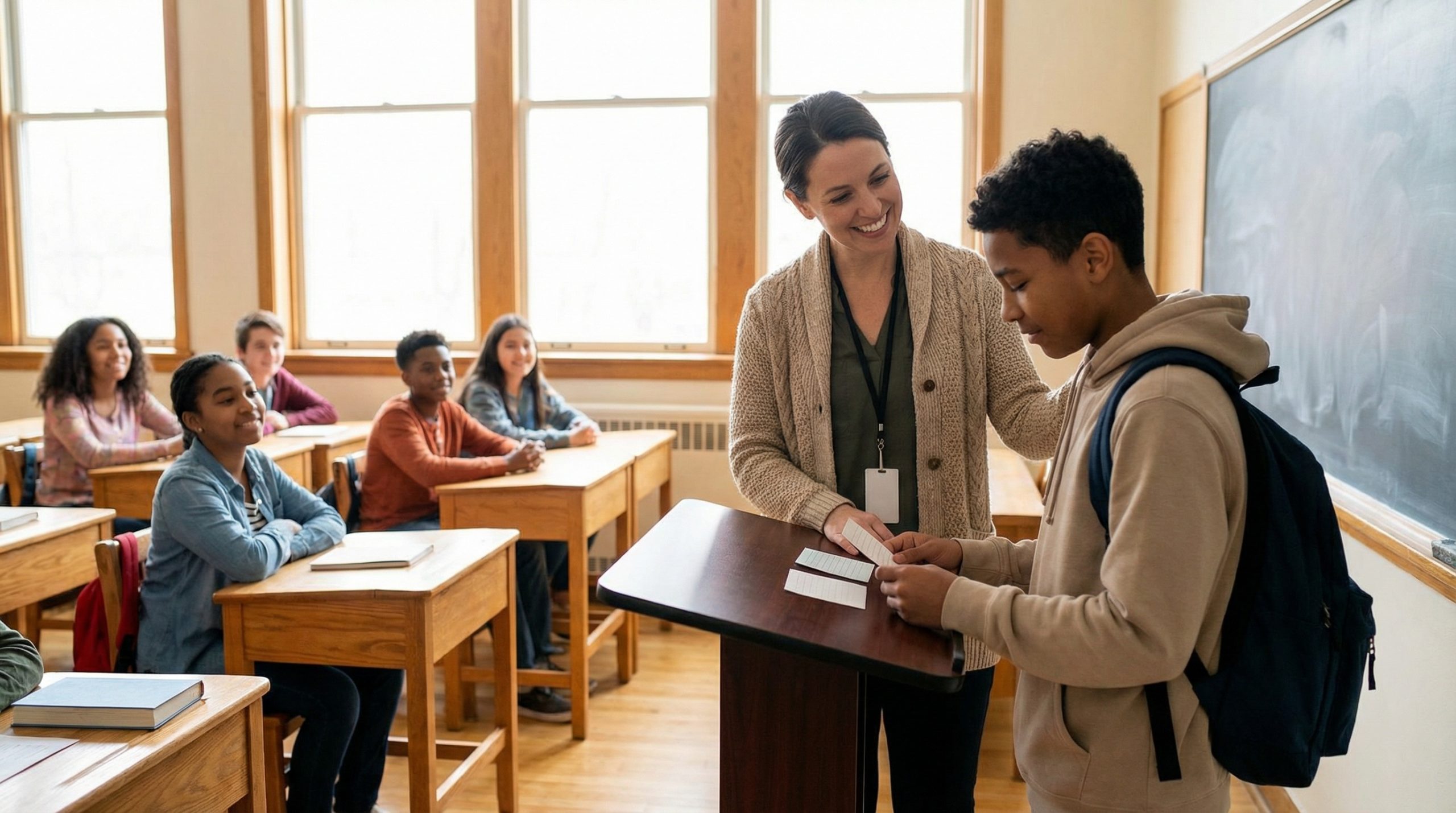
I’ll never forget the ninth-grade student who stood at the front of my classroom, note cards trembling in her hands, mouth open, but completely silent. The class waited. I waited. She looked at me with eyes that said, “Please, just let me sit down.” I nodded, she returned to her seat, and she didn’t make eye contact with anyone for the rest of the period.
That moment broke something in me as an educator. Because I realized that what I’d just put her through wasn’t education — it was exposure therapy without the therapy. She was terrified, and my response was to make her stand in front of 30 peers with no preparation for the emotional experience of presenting. I was teaching the content but ignoring the human.
Since then, I’ve spent years studying why students are afraid of presenting — and more importantly, what teachers can do to help them through it. Here’s what I’ve learned.
The Science Behind Presentation Anxiety
Glossophobia — the fear of public speaking — affects an estimated 75% of people to some degree, according to the National Institute of Mental Health. For adolescents, the numbers are likely higher because their brains are still developing the prefrontal cortex — the part responsible for emotional regulation and social confidence.
When a student stands in front of a class, their brain activates the same threat response as encountering physical danger. Cortisol floods the system. Heart rate increases. Hands shake. Vision narrows. The brain literally prepares for fight or flight — while the student is supposed to explain photosynthesis.
Understanding this isn’t about making excuses for avoidance. It’s about recognizing that presentation anxiety is a physiological response, not a character flaw. When we treat it as laziness or stubbornness, we deepen the shame. When we treat it as a manageable challenge, we open the door to growth.
Why Adolescents Are Especially Vulnerable
Teenagers aren’t just nervous about presenting. They’re navigating a developmental stage where social evaluation is genuinely threatening to their identity:
The “imaginary audience” effect. Developmental psychologist David Elkind described how adolescents believe everyone is watching and judging them — constantly. In a presentation setting, this belief becomes reality. Everyone IS watching. The anxiety isn’t irrational; it’s developmentally appropriate.
Social hierarchy is everything. In a teenager’s world, peer perception determines social standing. Making a mistake in front of classmates isn’t just embarrassing — it’s socially dangerous. A stumbled word can become a hallway joke. That’s not a hypothetical for students; it’s a lived reality.
Limited positive experiences. Most students have never had a positive presenting experience. Their only reference points are anxiety-filled moments. Without positive memories to draw on, every new presentation feels like walking into the unknown — and the unknown is terrifying.
What NOT to Do (Common Mistakes Teachers Make)
Before we talk about solutions, let’s address what doesn’t work:
“Just get up and do it.” Forcing an anxious student to present without preparation or support doesn’t build confidence — it builds trauma. Exposure without graduated support is counterproductive.
Grading heavily on delivery. When the largest portion of a presentation grade comes from “eye contact” and “vocal projection,” you’re penalizing anxiety, not rewarding learning. Anxious students focus on surviving, not on demonstrating knowledge.
Surprise presentations. “Okay, who wants to go first?” is the most terrifying sentence in education. Giving students no control over when they present amplifies anxiety. Predictability creates safety.
Public criticism. Giving feedback about delivery in front of the class is humiliation disguised as education. Always give delivery-related feedback privately.
A Graduated Approach to Building Confidence
Here’s the framework I use, based on principles from cognitive behavioral therapy and proven techniques for overcoming stage fright:
Level 1 — Present to one person. Start the year with partner presentations. Students present to one classmate, seated, at their desk. Low visibility, low risk. Many students who would freeze in front of the class can speak comfortably to a single peer.
Level 2 — Present to a small group. Groups of 4-5 students. The audience is larger, but still manageable. Students can sit or stand. The key is choice — let them decide whether to sit or stand, whether to use notes or not.
Level 3 — Present from a “safe zone.” Instead of standing at the front of the room, let students present from their desk area. They can stand next to their seat, with their familiar surroundings around them. This removes the “stage” feeling that triggers anxiety.
Level 4 — Present to the whole class. By this point, students have successfully presented three times with increasing visibility. They have positive reference experiences. They know they can do it — because they already have. Standing at the front of the room is now the next step, not the first step.
Practical Strategies for the Classroom
Give advance notice and clear expectations. Tell students exactly when they’ll present, what’s expected, and how long they’ll have. Publish the order at least a week in advance. Uncertainty fuels anxiety; clarity calms it.
Allow note cards and visual aids. Memorization isn’t the goal — communication is. Letting students use note cards reduces the fear of forgetting and lets them focus on the audience instead of their memory.
Teach breathing techniques. Before presentations, lead the class through a 60-second breathing exercise: four counts in, hold for four, four counts out. This activates the parasympathetic nervous system and physically reduces the stress response. Pair this with a warm-up routine adapted for students.
Model vulnerability. Share your own presentation anxiety with students. “I still get nervous before speaking to a room of adults. Here’s what I do about it.” When students see that adults experience the same fear — and manage it — it normalizes the experience.
Separate content grade from delivery grade. Grade the content knowledge demonstrated in the presentation separately from delivery skills. This means a student who knows the material but struggles with delivery still earns a strong grade — while receiving constructive feedback on presentation skills as a growth area, not a failing.
Technology as a Confidence Builder
For severely anxious students, technology offers intermediate steps:
Recorded presentations. Let students record their presentation at home and submit the video. They can re-record until they’re satisfied. This removes the live audience pressure while still practicing the skill of speaking to a camera — which is increasingly relevant in a remote-work world.
Screen-share presentations. Students present via video call while sitting at their desk, sharing their screen. This reduces the physical vulnerability of standing alone in front of the room while still requiring them to speak and navigate their slides.
Voiceover slides. Tools like Google Slides, PowerPoint, and Canva allow students to record audio narration over their slides. The class can watch the presentation while the student sits at their desk — present in the room but not physically “on stage.”
Building a Presentation-Friendly Classroom Culture
The classroom environment matters more than any individual strategy. Here’s how to create a culture where presenting feels safe:
Applaud every presentation. Genuine applause after every student presentation — no exceptions. This creates a ritual of support that makes the experience feel celebratory rather than evaluative.
Establish peer feedback norms. Teach students to give “glows” (what worked well) before “grows” (what could improve). Written peer feedback is less intimidating than verbal — provide feedback cards that start with “I liked when you…”
Celebrate effort, not perfection. The student who fought through anxiety and presented for 3 shaky minutes accomplished more than the naturally confident student who breezed through a polished 10-minute talk. Acknowledge that effort publicly.
Share your own “worst moment.” Tell students about a time you stumbled, forgot your words, or felt embarrassed while presenting. This humanizes the experience and reminds them that mistakes are universal — even for adults who do this for a living.
When to Involve a Counselor
Presentation anxiety exists on a spectrum. For most students, the strategies above will help them build confidence over time. But for some, the anxiety is severe enough to qualify as social anxiety disorder — and it requires professional support, not just classroom strategies.
Signs that a student may need counselor referral:
- Physical symptoms: nausea, crying, hyperventilating, or refusing to come to school on presentation days
- Total avoidance that persists despite graduated exposure
- Anxiety that extends well beyond presentations into other social situations
- Self-deprecating language: “I’m stupid,” “Everyone will laugh at me,” “I can’t do anything right”
These students aren’t being dramatic. They’re experiencing a clinical level of anxiety that classroom strategies alone can’t address. Involve your school counselor and work together to create accommodations that support the student’s mental health while still building toward the skill of presenting.
Every Student Can Present — With the Right Support
That ninth-grader who froze in my classroom? She came back the next year. I used the graduated approach — partner presentations, then small groups, then her desk area. By April, she stood at the front of the room and delivered a 5-minute presentation about marine biology. Her hands shook. Her voice wavered in the first minute. But she finished. And when the class applauded, she smiled — genuinely, for the first time during a presentation in her life.
As educators, we aren’t just teaching content. We’re teaching students that they can face hard things and survive. Presenting is one of those hard things. Our job isn’t to eliminate the fear — it’s to make the fear manageable, and then to stand beside our students while they walk through it.
Learning isn’t about slides — it’s about moments of understanding. And sometimes, the most important thing a student understands is that they’re braver than they thought.