


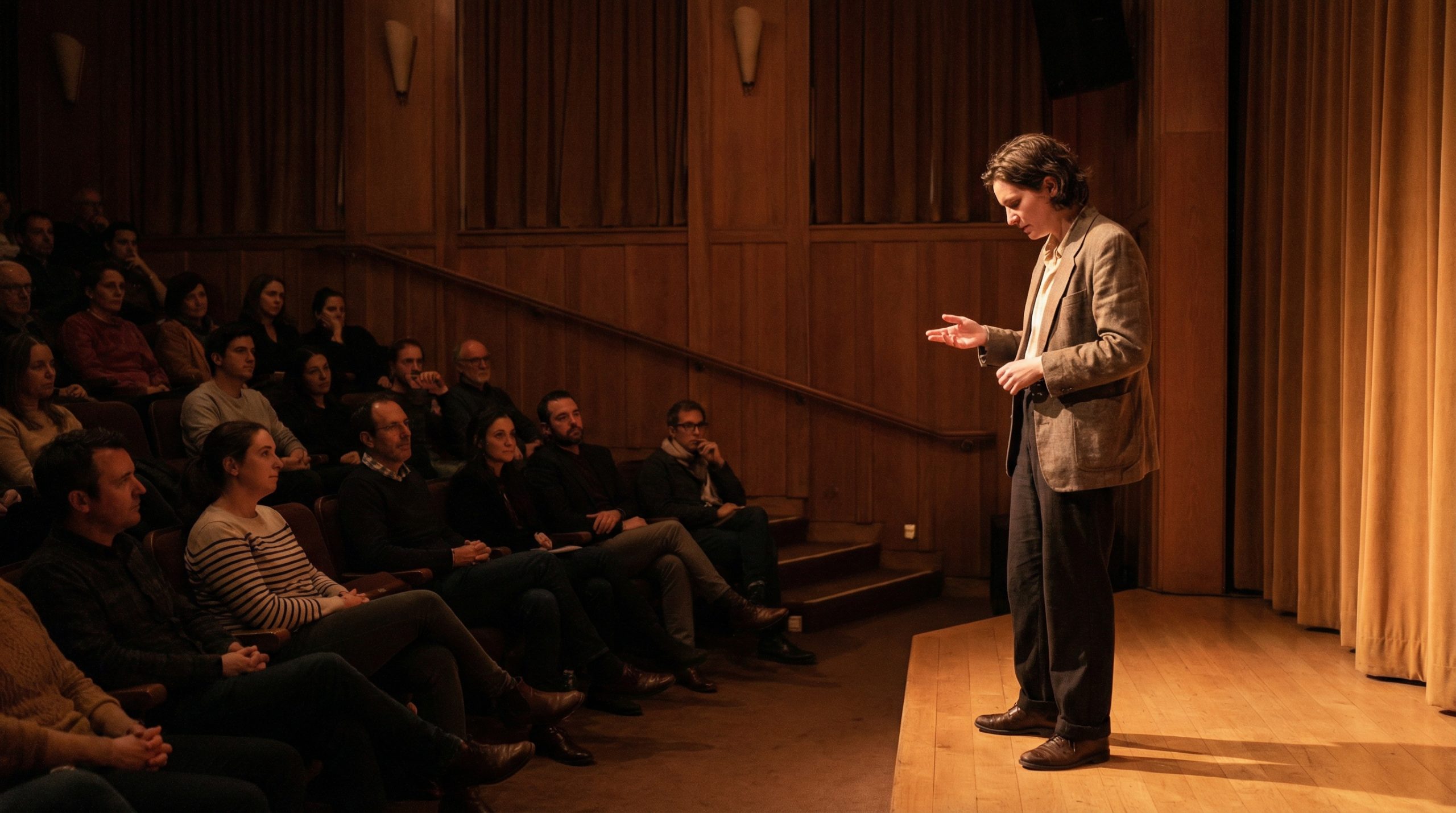
Let’s get something straight right away: being an introvert doesn’t mean you’re bad at public speaking. Some of the most captivating speakers in history — from Susan Cain to Barack Obama to Rosa Parks — have been introverts. The difference isn’t that they overcame their introversion. They leveraged it.
If you’re an introvert who dreads public speaking, this guide isn’t going to tell you to “just be more outgoing.” That’s terrible advice. Instead, we’ll work with your natural strengths — your depth of thought, your ability to listen, your preference for meaningful connection — and turn them into your secret weapon on stage.
Understanding the Introvert’s Real Challenge
The issue isn’t stage fright (extroverts get that too). The real challenge for introverts is energy. Social interaction drains your battery. Speaking in front of people is one of the most intensely social activities possible. So the question isn’t “How do I become an extrovert?” — it’s “How do I manage my energy so I can perform at my best?”
Susan Cain’s landmark TED Talk on the power of introverts has been viewed over 30 million times. She didn’t deliver it by pretending to be someone she wasn’t. She prepared intensely, spoke authentically, and let her quiet conviction do the heavy lifting.
Prepare More Than Everyone Else
Here’s your biggest advantage: introverts are naturally inclined toward deep preparation. Lean into this. While extroverted speakers might wing it with charisma, you can outprepare everyone in the room.
Script your opening and closing word-for-word. These are the highest-anxiety moments. Knowing exactly what you’ll say eliminates the “blank mind” panic that hits when you first face the audience.
Rehearse out loud at least five times. Not in your head — actually speak the words. Introverts often have rich internal monologues, but the transition from thinking to speaking is where stumbles happen. Bridge that gap with practice.
Record yourself. Yes, it’s uncomfortable. Yes, do it anyway. Watching yourself reveals pacing issues, filler words, and body language habits you’d never catch otherwise. It also desensitizes you to being “observed.”
Design Your Environment
Whenever possible, shape the speaking environment to work for you, not against you:
Request a smaller room. If you’re speaking at a workshop or team meeting, a smaller, more intimate space feels less overwhelming and plays to your strength of creating personal connections.
Arrive early. An empty room is far less intimidating than walking into a full one. Use the time to test your equipment, get comfortable on stage, and chat with a few early arrivals. Those brief connections give you friendly faces to look at later.
Control the lighting. If possible, have the house lights slightly dimmed while keeping the stage lit. This reduces the visibility of individual faces in the audience — which paradoxically makes it easier to “look at” the audience without the sensory overload of making eye contact with dozens of people simultaneously.
Use Your Natural Depth
Extroverted speakers often rely on high energy, humor, and rapid audience interaction. That’s one style, but it’s not the only effective one. Introverts excel at:
Thoughtful storytelling. You don’t need to be loud to be compelling. A well-crafted personal story, told with genuine emotion and careful pacing, can hold a room absolutely silent. That silence isn’t disengagement — it’s rapt attention.
Deep expertise. Introverts tend to study topics thoroughly. When you speak from genuine depth of knowledge, your audience senses it. You don’t need flashy delivery when your content is genuinely insightful.
Authentic vulnerability. Sharing that you find speaking challenging — briefly, without apologizing — can actually build connection. Audiences root for authenticity. Just keep it to a sentence or two, not a theme.
Manage Your Energy Strategically
This is the most overlooked aspect of public speaking for introverts. Treat your energy like a budget:
Before the talk: Protect your alone time. Don’t schedule social lunches or networking sessions right before you speak. Spend 15-30 minutes alone — listening to music, reviewing your notes, or simply sitting quietly. This is recharging, not hiding.
During the talk: Build in pauses. Pauses serve double duty — they give your audience time to absorb your points AND give you micro-moments to reset. A three-second pause feels eternal to the speaker but feels perfectly natural to the audience.
After the talk: Plan your exit. You don’t need to work the room for an hour afterward. Have a specific, time-limited plan: “I’ll stay for 15 minutes of questions, then I have to leave.” Knowing there’s an endpoint makes the post-talk social interaction manageable.
Reframe the Narrative
Most public speaking advice is written by extroverts for extroverts. “Work the room!” “Feed off the energy!” “Be spontaneous!” That advice can make introverts feel fundamentally broken. You’re not.
Reframe what a “good speaker” looks like:
- You don’t need to be the loudest voice — you need to be the clearest
- You don’t need to entertain — you need to inform and connect
- You don’t need high energy — you need genuine presence
- You don’t need to love the spotlight — you need to have something worth saying
Some of the best TED Talks are delivered in quiet, measured tones. The audience leans in because the speaker is calm, not despite it.
Practical Techniques for the Stage
Here are specific tactics that work particularly well for introverted speakers:
The lighthouse technique: Instead of trying to make eye contact with individuals (which can feel draining), look at sections of the room in a slow sweep — left, center, right. It reads as eye contact to the audience but feels much less intense.
Anchor phrases: Prepare 2-3 transition phrases you can use when your mind goes blank: “Let me show you what I mean…” or “Here’s why this matters…” These buy you a moment to regroup without anyone noticing.
Movement with purpose: You don’t need to pace the stage like a motivational speaker. But moving to a new position when transitioning between topics uses physical movement to reset your mental state.
Water breaks: Keep water nearby and take sips at natural transition points. It gives you a moment to breathe and recenter.
Your Quiet Advantage
The world of public speaking doesn’t need more noise. It needs more signal. Introverts bring thoughtfulness, depth, and authenticity — qualities that audiences are increasingly hungry for in an age of performative everything.
Your goal isn’t to become a different kind of speaker. It’s to become the best version of the speaker you already are. Prepare deeply, manage your energy, design your environment, and trust that your quiet confidence is more powerful than you think.
Discover more speaking strategies and presentation techniques at Presenter’s Arena.