


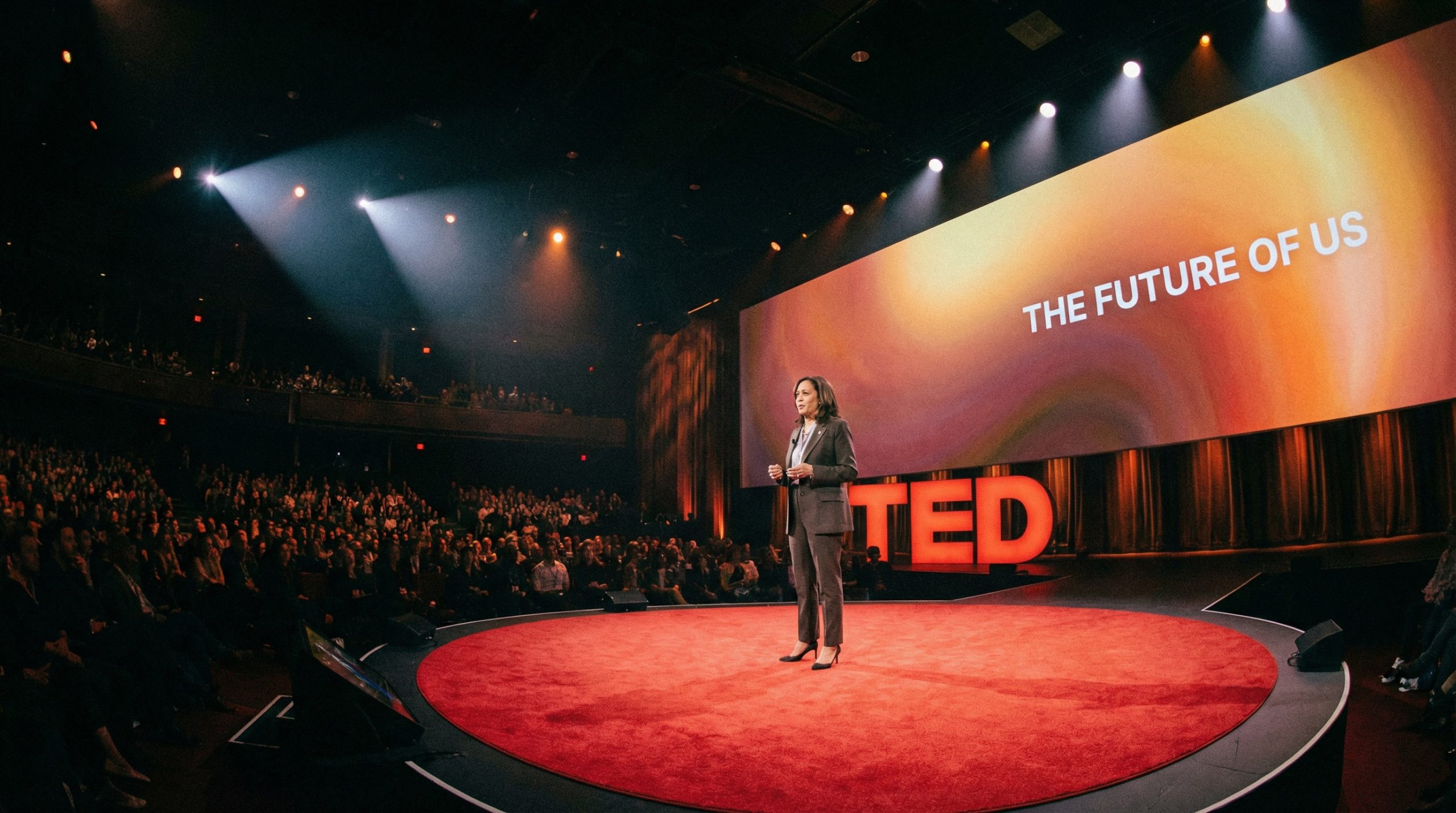
The Stage Moment That Changed How I Watch TED Talks
I was backstage at a TEDx event in Cairo when I overheard a speaker rehearsing. She wasn’t practicing her words — she was practicing her pauses. That’s the moment I realized what separates a good talk from a legendary one. It’s never just the content. It’s the delivery, the structure, the human connection.
Over the years, I’ve watched hundreds of TED talks — not just for entertainment, but to study them. What makes one talk get 10 million views while another with equally brilliant ideas fades into obscurity? After years of coaching speakers and studying what works, I’ve narrowed it down to 10 TED talks every presenter must watch, regardless of their industry or experience level.
1. Sir Ken Robinson — “Do Schools Kill Creativity?”
With over 70 million views, this is the most-watched TED talk of all time — and for good reason. Robinson doesn’t use slides. He doesn’t pace the stage dramatically. He just tells stories and makes you laugh while fundamentally challenging how you think about education. Watch this for his masterful use of humor and narrative. If you’ve ever struggled with making a dry topic engaging, Robinson is your professor.
The key takeaway? You don’t need flashy visuals. A well-told story with perfect comedic timing can hold a room of 1,200 people in silence.
2. Brené Brown — “The Power of Vulnerability”
Brown walks on stage and calls herself “a researcher-storyteller.” That framing is genius. She gives herself permission to be personal in a way most academics never dare. Her talk on vulnerability has been watched over 60 million times because she does something radical: she gets personal. She shares her own breakdown, her resistance to her own research findings.
For presenters, this is a masterclass in authenticity. Brown proves that your audience doesn’t want a polished robot — they want a real human with real stakes in the story. If you’re preparing for a keynote or a pitch, watch how she builds trust in the first 90 seconds.
3. Simon Sinek — “How Great Leaders Inspire Action”
Sinek’s “Start With Why” talk is the one I recommend most to business presenters. His framework — the Golden Circle — is so simple you can draw it on a napkin, and that’s exactly why it works. He stands at a flip chart, draws three circles, and changes how millions of people think about marketing and leadership.
The lesson? Great presentations need a clear framework. If your audience can’t explain your main idea to someone else in one sentence, you haven’t simplified enough.
4. Amy Cuddy — “Your Body Language May Shape Who You Are”
I’ve used Cuddy’s “power pose” research in my coaching workshops for years. Whether or not you buy the full science, her talk is a presentation masterclass in personal vulnerability combined with research. She gets emotional on stage, nearly tears up, and the audience leans in harder.
What presenters should study here is her body language itself. Watch her hands, her posture, her eye contact. She’s literally demonstrating her thesis in real time. That’s presentation design at its most elegant — when your delivery IS your content. For more on this, check out eye contact rules that actually work in presentations.
5. Hans Rosling — “The Best Stats You’ve Ever Seen”
If you’ve ever thought data presentations have to be boring, Rosling will change your mind in 20 minutes. The late Swedish statistician turned global health data into theater. He used animated bubble charts and narrated them like a sports commentator — and the audience went wild.
This is the talk I show every data-heavy presenter who says, “But my content is just numbers.” Rosling proves that data visualization can turn numbers into stories. Your data isn’t the problem. Your delivery is.
6. Chimamanda Ngozi Adichie — “The Danger of a Single Story”
Adichie is a novelist, and you can feel it in every sentence. Her talk about how single narratives reduce people and cultures is both politically powerful and structurally brilliant. She layers story upon story — each one building on the last, creating an emotional crescendo that makes her final point unavoidable.
For presenters, this is a lesson in narrative layering. Don’t just make one point with one example. Build your argument through multiple stories that converge on the same truth. It’s harder to do, but infinitely more persuasive.
7. Jill Bolte Taylor — “My Stroke of Insight”
Taylor, a brain researcher, had a stroke and studied it as it happened. She walks on stage, pulls out a real human brain, and tells the story of her own neurological collapse. It’s dramatic, scientific, and deeply personal all at once.
What I want you to notice is her use of props. She doesn’t use slides for the most dramatic moment — she holds a brain. Physical objects create attention spikes that no animation can match. If you have the chance to bring something tangible on stage, do it. Your audience will remember it forever.
8. Julian Treasure — “How to Speak So That People Want to Listen”
This is the most directly useful TED talk for anyone who presents regularly. Treasure breaks down the vocal toolbox — pace, pitch, silence, volume — and gives you specific exercises to improve each one. I assign this talk as homework to every coaching client.
His HAIL framework (Honesty, Authenticity, Integrity, Love) is something you can practice before your next presentation. Pair it with a solid warm-up routine and you’ll feel the difference immediately.
9. David Epstein — “Why Specialization Is Overrated”
Epstein’s talk is a quieter entry on this list, but it’s a masterclass in counterintuitive framing. He takes something everyone assumes (specialization leads to success) and systematically dismantles it with compelling evidence and unexpected stories — from Roger Federer to research on military strategy.
The presentation lesson? Challenge your audience’s assumptions early. When you say, “Everything you think you know about X is wrong,” people stop scrolling, stop daydreaming, and start listening. Counterintuitive openings are one of the most powerful tools in a speaker’s arsenal.
10. Monica Lewinsky — “The Price of Shame”
Lewinsky’s 2015 TED talk is courage incarnate. She walks into a room full of people who think they know her story and reframes it entirely. Her poise, her humor, her vulnerability — it’s all extraordinary, especially given the stakes.
For presenters, this talk teaches the power of owning your narrative. If you’re presenting in a hostile room or on a controversial topic, Lewinsky shows you how to acknowledge the elephant, address it directly, and then redirect to your message. Also worth studying: how to present to a room that doesn’t want to listen.
What These 10 Talks Have in Common
If you watch all 10 back to back (which I’ve done — don’t judge me), you’ll notice patterns that transcend topic and style:
- They all start with a story or a question, never with “Today I’m going to talk about…”
- They use minimal slides — or none at all. The speaker IS the presentation.
- They get personal. Every single one shares something vulnerable.
- They have one clear takeaway. Not five, not twelve. One.
- They practice silence. The pauses are where the magic happens.
These aren’t just talks. They’re blueprints for compelling presenting. Whether you’re pitching to investors, training a team, or speaking at a conference, the principles are the same.
Your Next Move
Here’s what I want you to do this week: pick three talks from this list. Watch each one twice — once for content, once for technique. Pay attention to the pauses, the transitions, the moments where the audience laughs or falls silent. Take notes. Then, before your next presentation, steal one technique and try it.
Practice doesn’t make perfect. Practice makes prepared. And the best way to prepare is to learn from presenters who’ve stood on that red circle and made millions of people stop and think.
Your next presentation is your next chance. Make it count.